
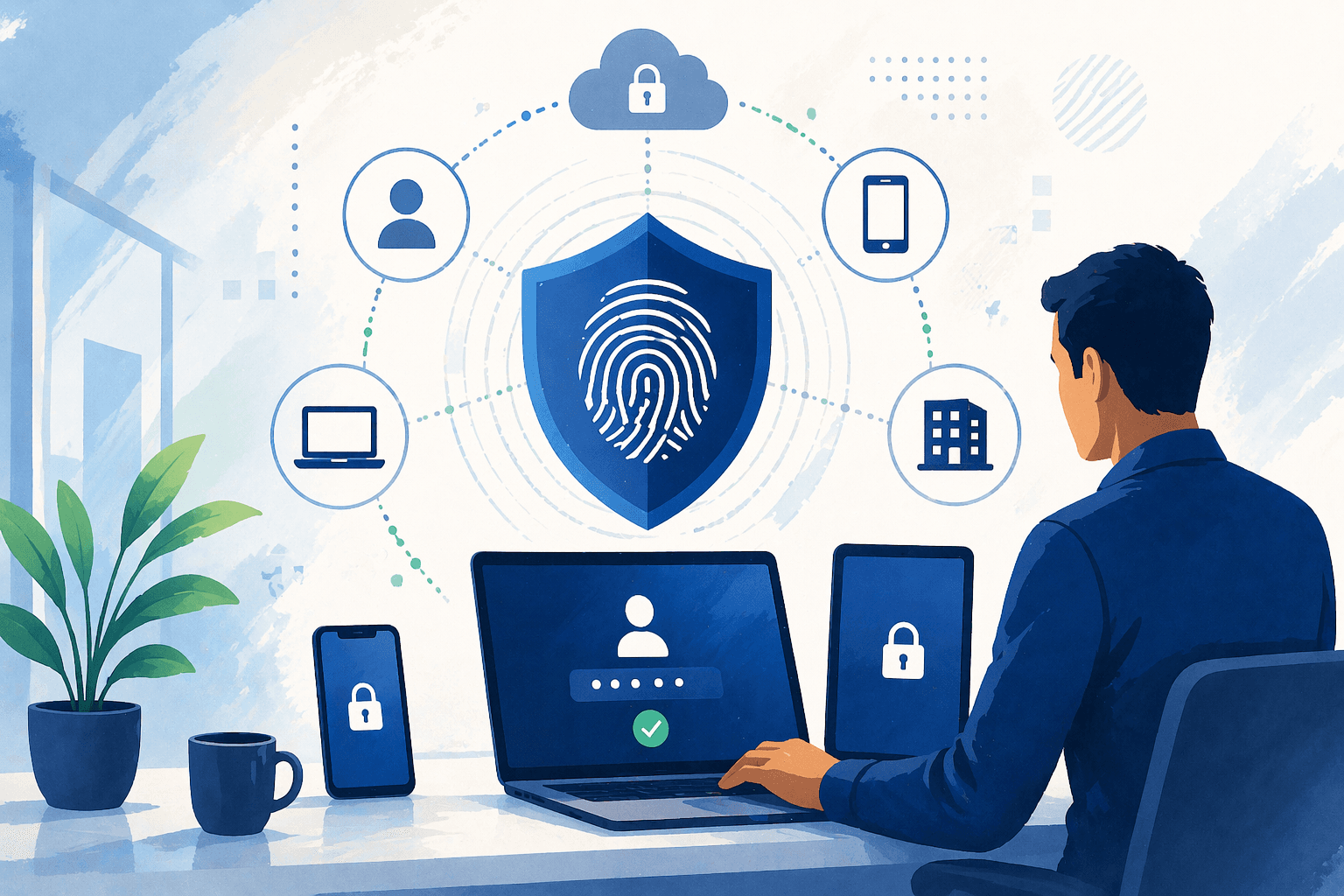
Aura Enters Enterprise Security With Identity-First BYOD Platform — Closing the Last Unmanaged Gap for MSPs
Cyber Security / Foundational Security | 4 min read
Aura, a leading AI-powered online safety platform for individuals and families, has introduced Aura Business — a new enterprise security solution designed to close the identity-based security gap in modern businesses. Rather than focusing solely on securing enterprise systems and devices, Aura Business takes an identity-first approach: protecting corporate IT environments by first securing the employee accessing the systems. The initial offering is purpose-built for Managed Service Providers (MSPs) operating IT environments for small and medium-sized businesses — specifically targeting identity-based compromise tied to BYOD (Bring Your Own Device) environments, which Omdia research identifies as the primary unmanaged risk factor currently facing MSPs and their clients.
"Identity protection is in our DNA. Aura has spent years building AI-powered, all-in-one online protection for the whole family, and as identity-based risk grows in the enterprise, the opportunity was clear."
— Hari Ravichandran, Founder and CEO, Aura
Why Identity Has Become the Leading Attack Vector
Enterprise attacks were once driven by software vulnerabilities, device compromise, and system weaknesses. The threat model has fundamentally shifted. According to the Palo Alto Networks Global Incident Response Report 2026, 65% of breaches in the past year began with identity-based security compromises — including phishing, social engineering, and credential misuse. AI tools have made these attacks more convincing, more targeted, and faster to execute at scale. Traditional device management offerings have struggled to keep pace with the BYOD challenge in particular: they create operational complexity, expose MSPs to liability, and require full access to personal devices — causing many providers to simply avoid managing personal devices altogether. This leaves a significant unmanaged gap in the enterprise security stack. New research from analyst firm Omdia found that 65% of MSPs are fielding client requests for BYOD management services, and 55% of MSPs have experienced at least one BYOD-related security incident in the past 24 months. Of those incidents, credential theft or account compromise was the most common cause (45%), followed closely by email or messaging compromise — primarily phishing (42%).
How Aura Business for MSPs Works
Aura Business for MSPs solves the BYOD security problem by securing access at the identity and access layer — without requiring full device management or accessing personal data. The platform enforces security by ensuring only users on "healthy" devices can access business systems, without the operational complexity or privacy concerns of traditional Mobile Device Management (MDM). Key capabilities for MSPs include a multi-tenant dashboard providing centralised visibility into security health and compliance across all clients in one place; conditional access integration with Microsoft Entra ID to ensure only trusted, compliant users can access business applications; and policy management tools enabling enforcement of client security policies — such as minimum operating system levels and screen lock requirements — without full device control. At the employee level, the platform provides protections against malware, phishing across email and messaging platforms, password and credential monitoring, and secure browsing — alongside 24/7 direct-to-user support enabling employees to resolve security issues independently. Crucially, Aura does not access personal content or activity — maintaining a privacy-first approach that preserves trust while keeping users protected. As Jason Coville, Aura Business's Chief Channel Officer, explained: the platform was purpose-built for MSPs to provide business application security while also protecting the identity of the person.
Key Takeaways
- • Aura (Boston; AI-powered online safety platform for individuals and families; founder and CEO Hari Ravichandran) has launched Aura Business — an enterprise security solution taking an identity-first approach: securing the employee as the entry point to corporate IT environments, rather than focusing solely on systems and devices. Initial rollout is purpose-built for MSPs operating IT environments for SMBs.
- • The market context: 65% of breaches in the past year began with identity-based compromises — phishing, social engineering, and credential misuse (Palo Alto Networks Global Incident Response Report 2026). Identity has replaced device and software vulnerabilities as the primary enterprise attack vector. Traditional MDM tools create operational complexity, expose MSPs to liability, and require personal device access — causing many providers to avoid BYOD management altogether, leaving a critical unmanaged gap.
- • BYOD risk data (Omdia research): 65% of MSPs are fielding client requests for BYOD management services; 55% of MSPs have experienced at least one BYOD-related security incident in the past 24 months. Of BYOD incidents: credential theft or account compromise (45%) and email/messaging compromise — primarily phishing (42%) — were the top two causes.
- • How Aura Business for MSPs works: secures access at the identity and access layer without full device management or access to personal data. Key capabilities: multi-tenant dashboard (security health and compliance across all clients); conditional access integration with Microsoft Entra ID (only trusted, compliant users access business applications); policy management tools (minimum OS requirements, screen lock enforcement without full device control); direct-to-user 24/7 support (employees resolve security issues independently). Privacy-first: no access to personal content or activity.
- • Employee-level protections: malware protection; phishing safeguards across email and messaging platforms; password and credential monitoring; secure browsing. The platform enables employees to practice and benefit from security awareness training in a live environment — bridging the gap between what employees learn in training and what they actually do with their personal devices. Aura's entry into enterprise security extends its identity protection DNA — built over years on the consumer side — into the enterprise context where identity-based risk is now the primary threat vector.