
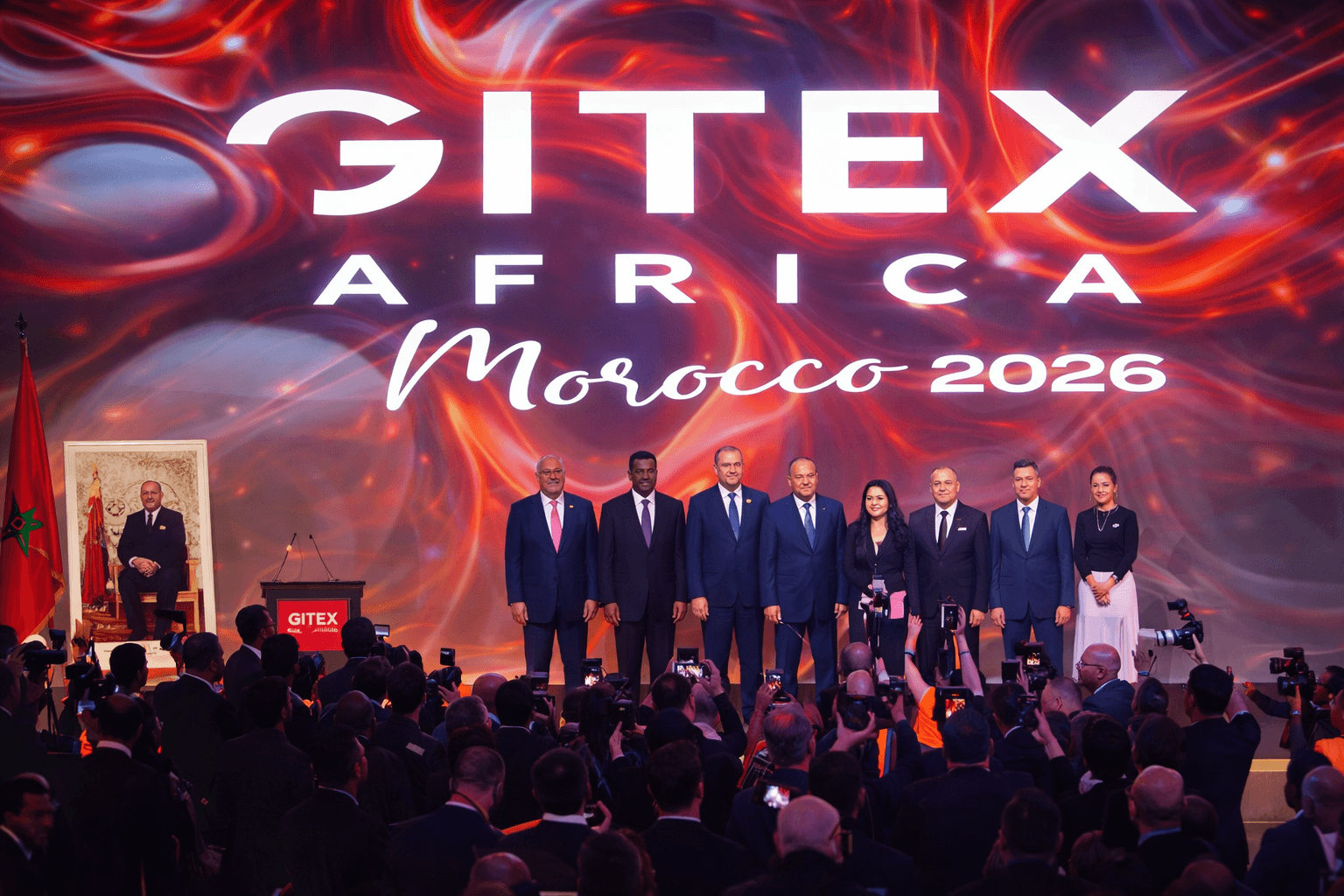
GITEX Africa 2026 Opens in Marrakech, Uniting Global Tech Leaders Around Africa's Digital Economy
AI / AI Tech Trends | 4 min read
The fourth edition of GITEX Africa Morocco — the continent's largest AI technology and startup show — officially opened on 7 April 2026 in Marrakech, running through 9 April under the theme "Catalysing Africa's Digital Economy in the Age of Artificial Intelligence." The event drew more than 1,450 exhibitors and startups from 145 countries and welcomed over 50,000 participants, with more than 700 international speakers and approximately 400 investors collectively managing over $350 billion in assets attending from more than 40 countries. Held under the High Patronage of His Majesty King Mohammed VI and under the authority of Morocco's Ministry of Digital Transition and Administration Reform, the event is hosted by the Digital Development Agency (ADD) and organised by KAOUN International — a subsidiary of the Dubai World Trade Centre.
"GITEX AFRICA was founded on a simple idea: to provide Africa with a platform to realise its full potential. Africa has the talent, energy and ambition. What it needs now is structured funding, targeted support for entrepreneurs, job-creating training programmes and integrated markets. To digital sector investors, I say: we are ready."
— H.E. Aziz Akhannouch, Head of Government, Morocco
Morocco's Digital Transformation: From Vision to Infrastructure
Morocco's opening statements went well beyond event promotion — they described a country in active digital transition. Prime Minister Akhannouch announced that Morocco had risen 14 places in the global government AI readiness index in 2025, surpassed 1.4 million fibre-optic home subscriptions, and is targeting 45% 5G population coverage by end of 2026. The country has also received its first major cloud hyperscaler investment, creating over 700 jobs. Minister Amal El Fallah Seghrouchni positioned Morocco as what she described as a "balancing technological power" — capable of connecting Europe, Africa, and the Atlantic — and framed the Kingdom's technological ambition as a new model of sovereignty: innovation placed at the service of development and the common good, balancing speed with responsibility. His Excellency Mouhamadou Youssifou, Dean of the African diplomatic corps, added that digital sovereignty is no longer optional for African countries — it is an imperative — calling for ethical, transparent, and sovereign AI that leaves no rural youth or vulnerable populations behind.
Scale, Startups, and Global Participation
The scale of GITEX Africa 2026 reflects the event's growing role as a genuine global platform rather than a regional trade show. New countries joining for the first time this year include Croatia, Czechia, Denmark, Hungary, Luxembourg, Thailand, Guinea, and Zambia. The Korea-Africa Foundation is attending for the third consecutive year, bringing seven Korean startups to explore African market expansion. France's Minister Delegate for Artificial Intelligence, Anne Le Hénanff, is present, spotlighting Franco-Moroccan digital partnerships. At the centre of the startup ecosystem is the North Star Africa showcase — the continent's largest startup pitching platform — with more than 800 local and international startups competing for investment, participating in scale-up programmes, talent academies, diaspora initiatives, and training workshops. Morocco's "Morocco 300" initiative — which covers 95% of costs for selected founders — has increased domestic startup participation by 50% over last year's Morocco 200 programme. Wamkele Mene, Secretary-General of the African Continental Free Trade Area Secretariat, emphasised that digital technologies will be key to unlocking Africa's full economic potential, with approximately 375 million young professionals expected to enter Africa's workforce by 2030.
Key Takeaways
- • GITEX Africa Morocco 2026 (fourth edition, 7–9 April, Marrakech, Place Bab Jdid) is the continent's largest AI and tech event: 1,450+ exhibitors and startups from 145 countries; 50,000+ participants; 700+ international speakers; 400+ investors managing $350B+ in assets from 40+ countries. Theme: "Catalysing Africa's Digital Economy in the Age of Artificial Intelligence."
- • Morocco's headline digital infrastructure progress: +14 places in global government AI readiness index (2025); 1.4M+ fibre-optic home subscriptions; 5G targeting 45% population coverage by end-2026; first major cloud hyperscaler investment (700+ jobs created). Minister El Fallah Seghrouchni framed Morocco as a "balancing technological power" connecting Europe, Africa, and the Atlantic — technology as a new model of sovereignty.
- • Digital sovereignty was the defining policy theme: the Dean of the African diplomatic corps stated that sovereign AI is no longer an option for African nations but an imperative — calling for ethical, transparent, and inclusive AI that reaches rural youth and vulnerable populations, not just urban centres. The AfCFTA Secretary-General linked digital technology directly to unlocking Africa's full economic potential.
- • North Star Africa showcase: 800+ local and international startups pitching, networking, and competing for investment; supported by scale-up programmes, talent academies, diaspora initiatives, and training workshops. Morocco 300 initiative covers 95% of costs for selected founders, increasing domestic startup participation 50% vs 2025. Investment matchmaking positions GITEX Africa as the continent's largest tech matchmaking platform.
- • New country participants in 2026: Croatia, Czechia, Denmark, Hungary, Luxembourg, Thailand, Guinea, and Zambia. Korea-Africa Foundation (third consecutive year, seven Korean startups). France's AI Minister Anne Le Hénanff present for Franco-Moroccan digital partnerships. Strategic context: 375 million young professionals expected to enter Africa's workforce by 2030, positioning GITEX Africa as a critical bridge between African talent and global capital, mentorship, and markets.