
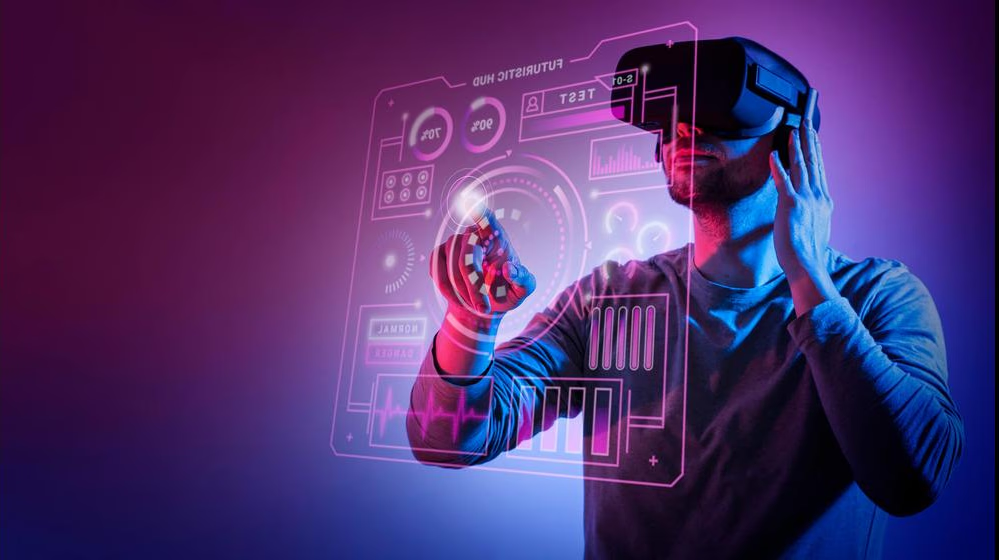
Extended Reality in 2025: Innovation Meets Immersion in Business
XR technologies—encompassing Augmented Reality (AR), Virtual Reality (VR), and Mixed Reality (MR)—have rapidly transitioned from experimental tools to core components of modern business strategy. With a projected market value of $1.6 trillion by 2032, up from $253.5 billion in 2025, XR is now a strategic necessity.
1. The Immersive Imperative
In 2025, the focus is no longer on what XR is, but how it can revolutionize existing operations. Businesses are seeking XR-based solutions that reshape how they function. The ecosystem is expanding rapidly due to advancements in AI, spatial computing, and the availability of more affordable XR hardware. Forecasts suggest over 100 million AR/VR headset shipments by 2025, signaling broad consumer and enterprise adoption.
Device leaders like Meta (Quest 3) and Apple (Vision Pro) are reshaping experiences in team collaboration, customer interaction, and corporate training.
2. Real-World Applications Redefining Industries
2.1 XR in Business
XR is driving operational excellence across sectors. In manufacturing, digital twins and immersive simulations enhance efficiency. Retailers use AR for virtual try-ons, reducing returns and elevating customer satisfaction.
2.2 XR in Healthcare
Healthcare is undergoing a digital transformation. Surgeons utilize VR for skill-building and precision. AR assists in diagnostics, while MR empowers remote consultations, bridging the care access gap.
2.3 XR and Social Interactions
XR is reshaping how we connect. Virtual collaboration platforms are fostering deeper, more natural interactions among distributed teams. This not only boosts productivity but also strengthens organizational culture.
3. Strategic Considerations for Leaders
3.1 Investment Priorities
To maximize XR’s potential, business leaders must align XR investments with long-term strategic goals. Scalable platforms and measurable ROI should guide decision-making processes.
3.2 Ethical Considerations in XR
With XR comes responsibility. Issues like data privacy, user consent, and digital well-being must be addressed. Implementing strong governance frameworks ensures responsible use and builds user trust.
3.3 Talent and Training
Successful XR integration requires a skilled workforce. Businesses must invest in upskilling employees, preparing them to use immersive tools effectively. This not only drives innovation but strengthens a company’s competitive edge.
4. The XR Horizon
The future of XR is deeply tied to the evolution of AI and spatial computing. AI-powered smart glasses and MR headsets will redefine human-computer interaction, with richer, more contextual digital content.
The journey toward the metaverse is accelerating, creating persistent digital spaces for commerce and collaboration. Navigating this space requires vision and adaptability from business leaders ready to tackle new opportunities and challenges.
Embracing the Evolution of XR
As 2025 unfolds, XR stands at the intersection of innovation and immersion. For executives and industry professionals, XR is no longer a futuristic concept—it's a present-day imperative. Integrating XR into strategic frameworks enables businesses to unlock new dimensions of productivity, creativity, and customer engagement.