
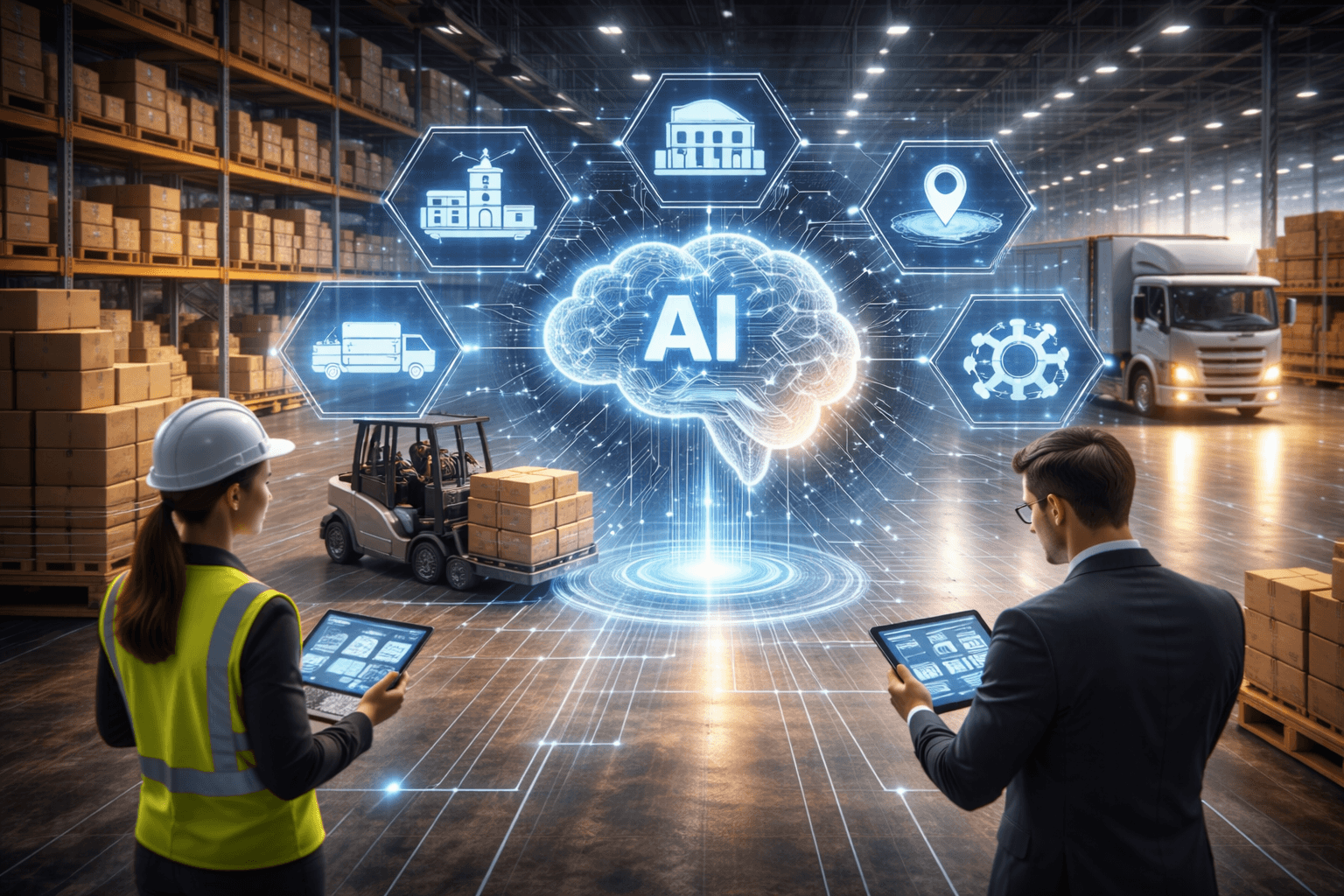
Kenco 2026 Report Reveals AI as a Key Driver for Supply Chain Innovation
Estimated Read Time: 4 minutes
Leading third-party logistics provider Kenco has released its latest 2026 supply chain report, highlighting how artificial intelligence is transforming logistics operations and improving decision-making across global supply chains.
The report, focused on emerging trends and technology adoption, underscores the rising importance of AI tools in boosting efficiency, visibility, and resilience as companies navigate complex market pressures and customer demands.
AI Adoption Expands Across Logistics Networks
According to Kenco’s research, organisations increasingly deploy AI-enabled applications to enhance forecasting accuracy, optimise inventory planning, and automate routine tasks. By analysing large data sets in real time, these systems help supply chain teams anticipate disruptions and adjust operations promptly.
This trend reflects a growing emphasis on smart supply chain strategies that leverage advanced technology, including machine learning, predictive analytics, and automated decision-making — all elements of modern supply chain management.
AI Enhancing Forecasting and Planning
One prominent theme from the 2026 report is the role of AI in demand forecasting. Traditional forecasting models often struggle with sudden market changes or complex seasonal patterns. AI-based solutions, however, can combine historical trends with real-time inputs to generate more accurate predictions for inventory and production planning.
Improved forecasting helps companies reduce stockouts, lower carrying costs, and match supply with fluctuating consumer demand — outcomes that are especially critical in industries with tight margins.
Automation Driving Operational Efficiency
Another key insight from Kenco’s findings is the increasing use of AI to automate repetitive operational tasks. From warehouse sorting and robotics to scheduling and route optimisation, AI systems streamline processes that traditionally require significant manual effort.
Automation not only cuts labour costs but also reduces the risk of human error, leading to faster throughput and greater reliability across logistics operations.
Building Resilience Through AI and Data
With supply chain complexity and uncertainty on the rise, organisations are turning to AI to strengthen operational resilience. The report suggests that companies using AI-driven insights are better equipped to respond to disruptions such as supplier delays, transportation bottlenecks, and geopolitical challenges.
By integrating real-time tracking, scenario modelling, and predictive risk analysis, AI tools give supply chain leaders greater visibility and agility in decision-making.
To read more about the findings and recommendations from Kenco’s supply chain research, visit the official Kenco website.