
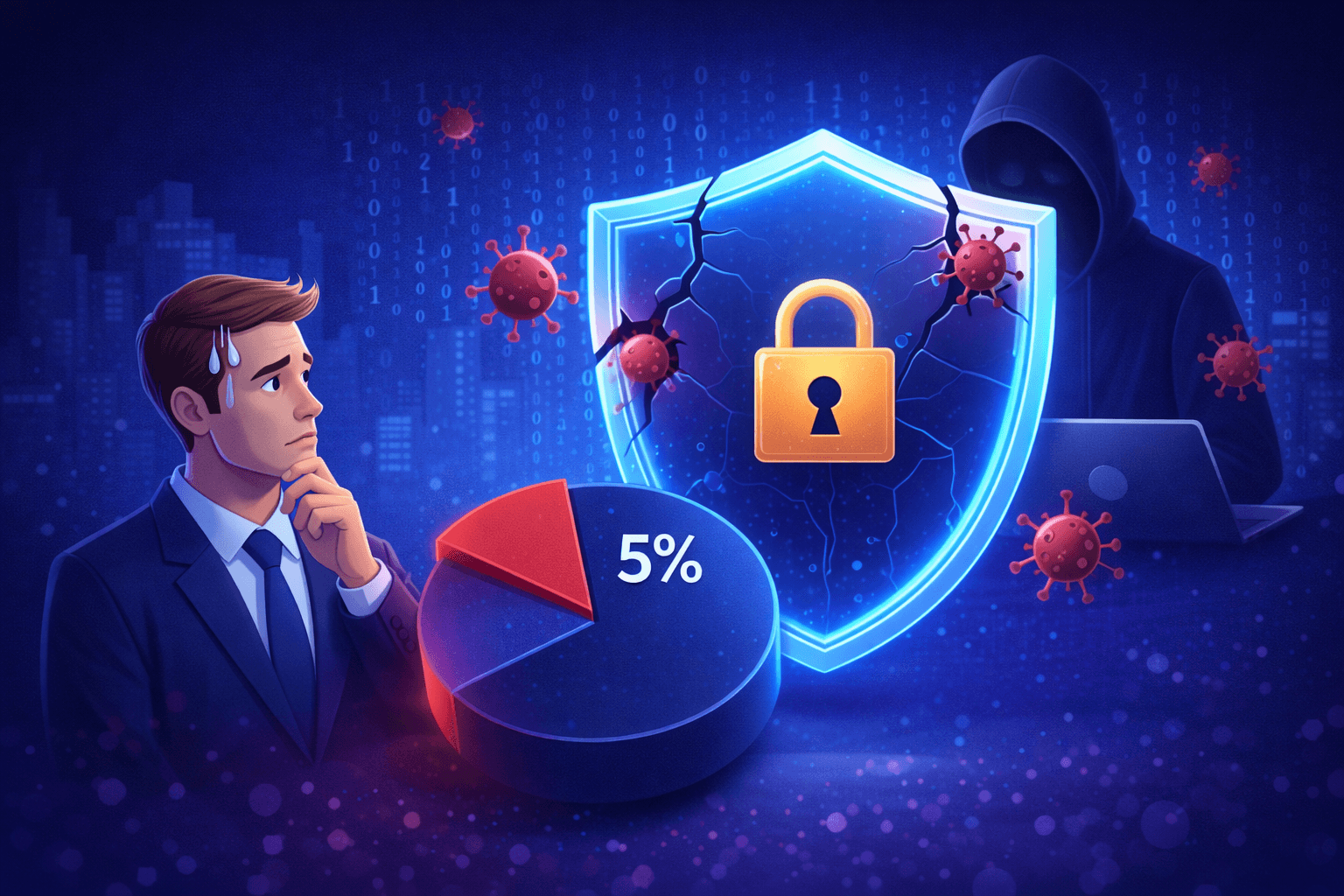
Only 5% of Organisations Have Full Trust in Their Cybersecurity Vendors, Global Study Finds
Cyber Security / Foundational Security | 5 min read
Sophos, a global cybersecurity leader, has released the Cybersecurity Trust Reality 2026 report — one of the most comprehensive studies ever conducted on trust in cybersecurity and its impact on operational risk and board-level decision-making. Based on responses from 5,000 organisations across 17 countries, the vendor-agnostic research reveals a finding that should unsettle the entire industry: only 5% of organisations have full trust in their cybersecurity vendors. At a moment of relentless cyber threats, heightened regulatory scrutiny, and accelerating AI adoption, trust has become a defining factor in cybersecurity decision-making — and the evidence shows it is profoundly broken.
The Numbers: A Systemic Crisis of Confidence
The scale of the trust deficit revealed by the research is significant across every dimension measured:
- • 95% of organisations report they do not have full trust in their cybersecurity vendors
- • 79% struggle to assess the trustworthiness of new cybersecurity partners
- • 62% find it challenging to assess trustworthiness even for their existing vendors
- • 51% report increased anxiety about the likelihood of a significant cyber incident — directly as a result of this lack of trust
These findings underscore a critical reality: cybersecurity effectiveness can no longer be measured by technological performance alone. The confidence that organisations have in the partners defending their business — and their ability to verify that confidence — has become an equally important variable in overall security posture.
"Trust is not an abstract concept in cybersecurity — it's a measurable risk factor. When organisations can't independently verify a vendor's security maturity, transparency, and incident handling practices, that uncertainty flows directly into boardrooms and security strategies. CISOs are being asked to prove trust, not assume it. Cybersecurity providers must do the same."
— Ross McKerchar, CISO, Sophos
What Drives Trust — and What Gets in the Way
The research identifies verifiable security artefacts — independent assessments, certifications, and demonstrated operational maturity — as the single greatest driver of vendor trust. However, what CISOs prioritise differs from what boards and senior leadership value. CISOs focus on transparency during incidents and consistent technical performance, while boards place greater weight on independent validation, certifications, and analyst performance. The primary barrier to confident trust assessments — cited by survey respondents — is a lack of accessible, sufficiently detailed information from vendors about their security practices, maturity, and incident handling.
AI Makes the Trust Question More Urgent
"With regulatory pressure increasing globally, organisations must be able to demonstrate due diligence in vendor selection — especially where AI is involved. Trust is shifting from a marketing message to a defensible compliance requirement."
— Phil Harris, Research Director, Governance, Risk and Compliance Solutions, IDC
As AI becomes more deeply embedded in cybersecurity tools, services, and workflows, the trust question gains an additional dimension. Organisations are no longer only evaluating whether security solutions are technically effective — they are evaluating whether AI is deployed responsibly, transparently, and with appropriate governance. The report makes this position clear: trust is no longer optional. It is foundational. For CISOs, trust gaps create operational friction, slower decision-making, and higher vendor turnover. For the industry, the report is a call to action — vendors must earn trust continuously through transparency, accountability, and independent validation, rather than relying on marketing assurances.
Key Takeaways
- • The Sophos Cybersecurity Trust Reality 2026 report — based on 5,000 organisations across 17 countries — finds that only 5% of organisations have full trust in their cybersecurity vendors, with 95% reporting a meaningful trust deficit.
- • 79% struggle to assess vendor trustworthiness for new partners; 62% find it challenging even for existing vendors; 51% report heightened anxiety about a significant cyber incident as a direct result of this trust gap.
- • The primary driver of trust is verifiable security artefacts — independent certifications, third-party assessments, and demonstrated operational maturity — not vendor marketing claims. The primary barrier is a lack of accessible, sufficiently detailed information from vendors.
- • CISOs and boards diverge on what they prioritise: CISOs focus on incident transparency and technical performance; boards and senior leadership weight independent validation, certifications, and analyst reports more heavily.
- • AI adoption accelerates the urgency: as AI is embedded in security tools and workflows, organisations must also assess responsible AI deployment and governance — making trust a defensible compliance requirement, not a marketing message.