SAP Completes Acquisition of TechWolf to Strengthen AI-Powered Workforce Intelligence
German enterprise software company SAP has completed its acquisition of Belgian AI company TechWolf, strengthening its capabilities in workforce intelligence, skills management and AI-powered human resources technology.
The acquisition is expected to strengthen SAP's SuccessFactors portfolio and support its broader strategy of integrating artificial intelligence into enterprise workforce management.
TechWolf's AI Technology to Become Part of SAP SuccessFactors
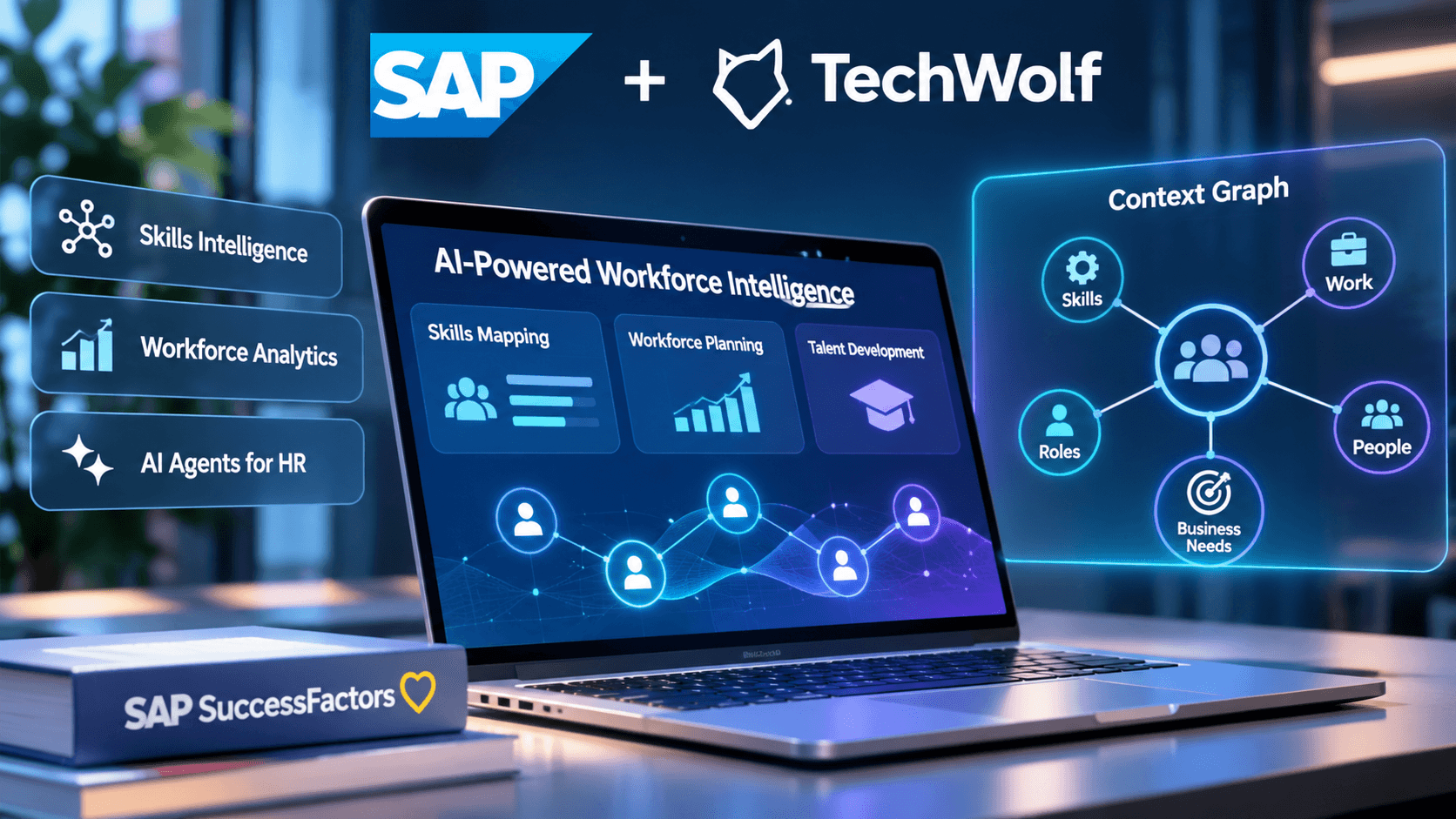
TechWolf's platform combines skills, work and labour market intelligence into a continuously updated context graph.
The technology analyses information from connected HR and business systems to build a clearer picture of the work employees perform, the skills they possess and how those capabilities relate to organisational requirements.
SAP plans to make TechWolf's technology an intelligent core of its SAP SuccessFactors portfolio.
The integration is expected to support workforce planning, skills mapping, talent management and organisational redesign.
Context Graph to Support Enterprise AI Agents
One of the key elements of the acquisition is TechWolf's proprietary context graph for work and skills.
This technology will provide a grounding layer for AI agent queries involving workforce planning, skills development and talent management.
According to SAP, the context graph is expected to make token usage more efficient and reduce the cost of deploying workforce agents.
It will also help improve Joule, SAP's AI assistant, in HR-related scenarios such as skills-based hiring, workforce planning and role redesign.
The development reflects the growing importance of providing AI systems with accurate business context rather than relying only on general-purpose information.
Supporting Workforce Transformation in the AI Era
As organisations introduce AI into business operations, understanding how jobs and employee responsibilities are changing has become increasingly important.
Businesses need to identify which tasks can be automated, where new skills are required and which employees may benefit from reskilling or internal mobility.
TechWolf's platform is designed to provide this information by connecting employee capabilities with actual work activities and business requirements.
This can help HR teams and business leaders make more informed decisions about recruitment, employee development and workforce deployment.
TechWolf Will Continue Operating Independently
Despite becoming part of SAP, TechWolf will retain its name, brand, founders and team.
The company will continue operating as an independent entity under CEO and co-founder Andreas De Neve, with its headquarters in Ghent, Belgium.
Its platform will remain available to both SAP and non-SAP customers, allowing existing clients to continue using its technology across their enterprise systems.
TechWolf also plans to expand its engineering and AI teams as it enters its next phase of growth.
What This Means for the HRTech Industry
The acquisition highlights the growing connection between artificial intelligence, workforce analytics and human capital management.
Traditional HR platforms primarily manage employee records, recruitment, payroll and performance processes. AI-powered workforce intelligence adds another layer by helping organisations understand the skills and tasks that shape their operations.
For the HRTech industry, this development signals increasing demand for platforms that can connect workforce information with business strategy and AI-driven decision-making.
Conclusion
SAP's completed acquisition of TechWolf strengthens its position in AI-powered workforce intelligence and enterprise HR technology.
By bringing TechWolf's context graph and AI capabilities into its SuccessFactors ecosystem, SAP aims to help organisations improve skills planning, workforce transformation and talent management.
As AI continues to reshape jobs and business operations, the ability to understand workforce capabilities and anticipate future skills requirements is becoming an important enterprise priority.