
Starling Folds Global eSIM Roaming Into Its Banking App
The UK digital bank teams with Gigs to sell 30-day data plans across 130-plus countries — pushing its fee-free travel pitch well beyond payments.
The Brief
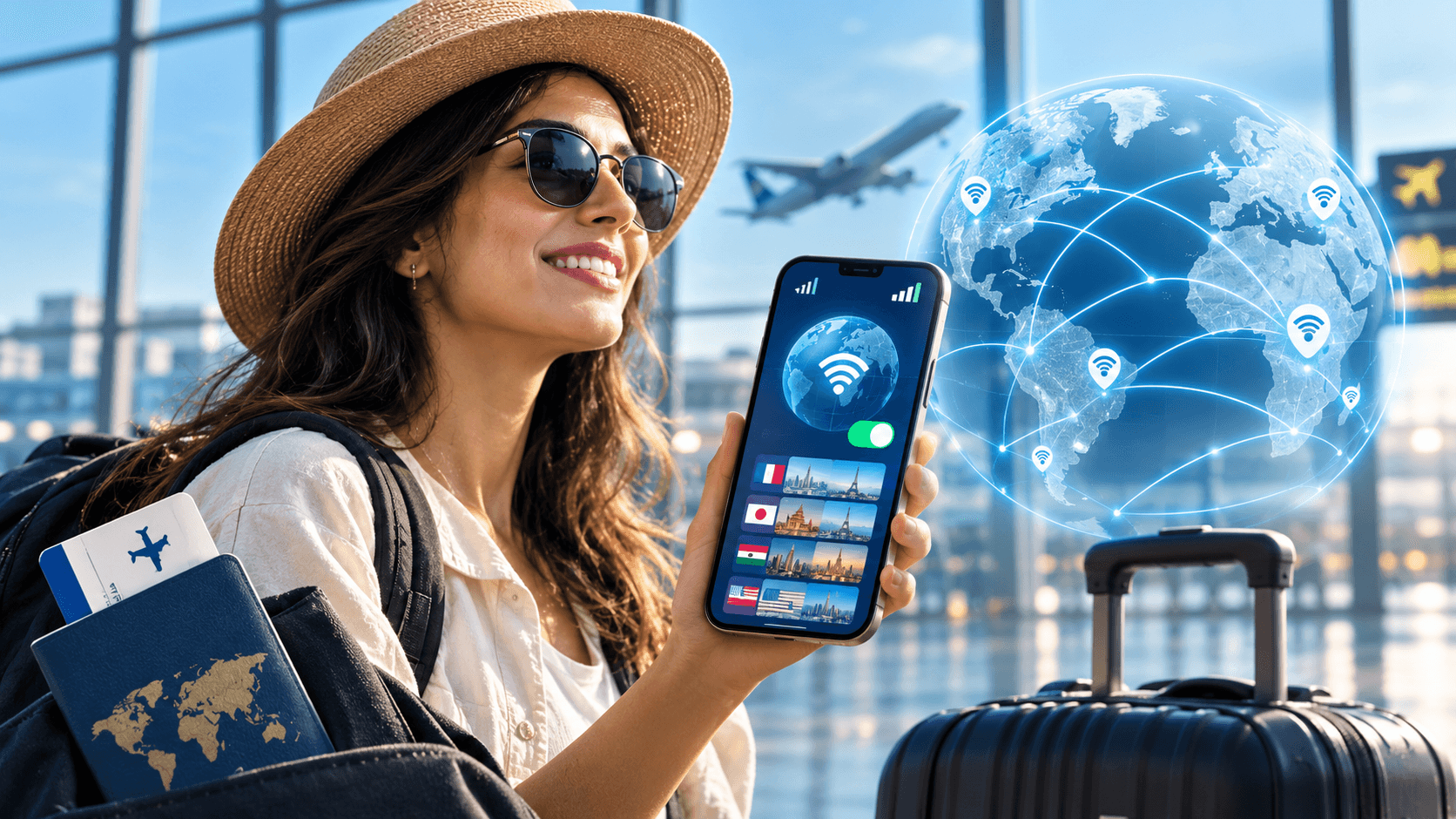
Starling has stepped past pure digital banking by building eSIM data-roaming plans straight into its app, powered by a partnership with connectivity platform Gigs. Travellers can buy a 30-day plan before they fly, have it switch on automatically the moment they land, and stay online across more than 130 countries with no roaming surprises. Combined with fee-free spending, a daily ATM allowance and a widening set of in-app travel tools, the launch reframes the bank as a full travel companion rather than just a card in the wallet.
Connectivity is now part of the current account. For a decade Starling has leaned on fee-free spending abroad as a headline reason to bank with it — and its latest move drags that pitch into a space most banks never touch: the mobile data in your phone.
The lender has added eSIM data-roaming plans directly to its app, working with telecom infrastructure platform Gigs to hand customers working coverage the instant they arrive. No separate SIM to buy, no unfamiliar local provider to hunt down, and no roaming bill waiting when they get home.
Connectivity moves inside the banking app
Rather than treating mobile data as someone else's problem, Starling has folded it into the same app people already use to manage money — positioning the eSIM as an extension of its travel proposition rather than a bolt-on.
The digital SIMs automatically select the strongest available network in each destination, covering more than 130 countries so users land with usable coverage from the outset. Group Chief Information Officer Harriet Rees describes the shift as a move beyond core banking rails into connectivity, one that demanded clean API integration and a dependable ecosystem behind it. By building on Gigs, she says, the bank has wired global telecom capability straight into the app, letting customers sidestep roaming charges and get online across 130-plus countries the moment they need to.
How the data plans actually work
The mechanics are built around removing decisions at the exact point travellers usually get caught out — at the airport, or worse, after they've already run up charges.
Starling offers four 30-day packages sized for different trips: 1GB, 3GB, 5GB and 10GB. Customers buy a plan inside the app before departure, and it activates on its own once they touch down. Allowances can be topped up mid-trip if a plan runs short, and even when the purchased data is fully used, the bank keeps access to its mobile banking app open with no roaming cost attached. Alongside the connectivity itself, the digital SIM sits next to fee-free spending abroad and a daily fee-free ATM withdrawal allowance of £300 (about US$392), plus a set of in-app tools aimed at international travel. Gigs chief executive and co-founder Hermann Frank frames the eSIM as the piece that had been missing: Starling was already a trusted companion for secure, fee-free spending overseas, and staying connected completes the toolkit — users online, in his telling, as soon as they hit the tarmac.
The missing piece of fee-free travel was never the spending — it was staying connected once the plane lands. — On completing the travel toolkit
A travel toolkit, not a single feature
The eSIM slots into a suite of tools Starling has already assembled around trips abroad, which is the point: the connectivity only matters because it fills a gap in something customers already lean on.
That existing kit includes a Travel Hub showing live exchange rates for local currencies, Spending Trackers for keeping tabs on holiday costs, and custom tags for organising trip budgets. Chief Customer and Banking Officer Bernadette Smith recalls that when the bank launched a decade ago, its fee-free travel offering set a standard traditional banks were then pushed to match — and she positions the eSIM as an addition to an offering the bank still regards as industry-leading. Her practical advice: pair the real-time Mastercard exchange rate with tools such as Starling Assistant and Spending Intelligence to budget before, during and after a trip, and use features like Scam Intelligence, temporary virtual cards, Split the Bill and Joint Accounts to protect money and divide group costs.
Why a bank is selling mobile data
The more interesting question is strategic: what does a digital bank gain by moving into telecoms at all?
The logic runs through embeddedness. By owning the whole journey — spending, currency, budgeting and now the connection itself — Starling gives customers fewer reasons to leave the app while travelling and more reasons to treat it as the default travel account. The eSIM is low-friction by design, activating on arrival and falling back to free banking access when data runs out, which keeps the experience consistent even at the edges. It also signals a broader pattern in consumer fintech: challenger banks increasingly compete less on interest rates and more on how many adjacent, everyday moments they can quietly absorb. Connectivity is simply the latest one.
Key takeaways
- Banks are absorbing adjacent services. Starling's eSIM shows challenger banks expanding past money management into everyday travel needs like mobile data.
- Embedding beats bolting on. Clean API integration with Gigs put telecom capability inside the existing app rather than shipping a separate product.
- Friction removal is the real pitch. Buy before you fly, auto-activate on landing, top up mid-trip — the value is in the decisions customers no longer have to make.
- Fee-free is the throughline. Roaming-free coverage joins fee-free spending and a £300 daily ATM allowance under one consistent promise.
- Travel is becoming a platform play. Owning connectivity, currency and budgeting together gives customers fewer reasons to ever leave the app abroad.