
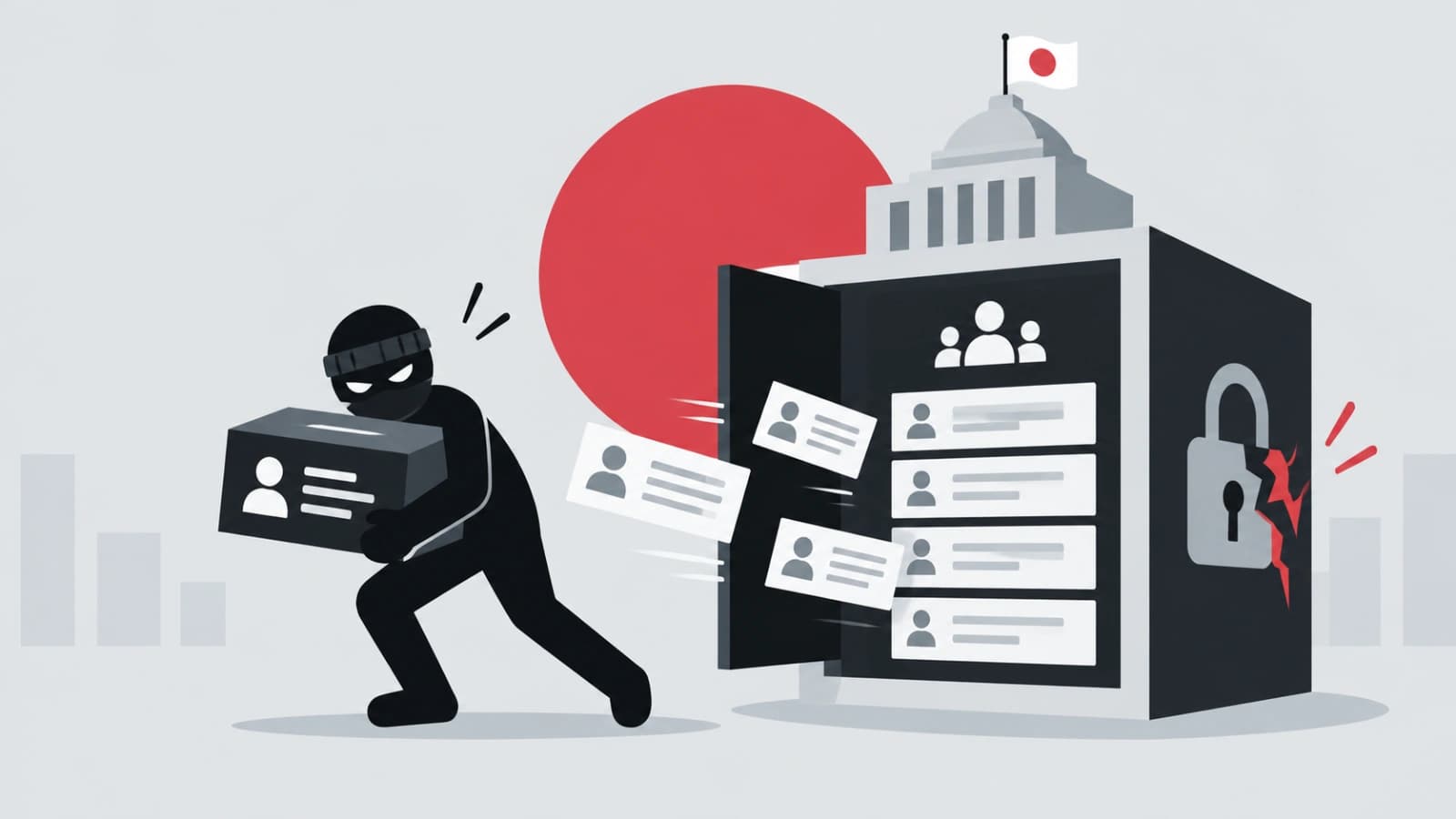
Japan is facing mounting cybersecurity concerns as more companies report data breaches involving millions of customer records. A recent incident involving approximately 77 million email addresses has brought renewed attention to the security of corporate systems, third-party service providers and customer information.
According to a November 3 report by The Japan Times, Tokyo-based Paycloud Holdings disclosed that hackers gained unauthorized access to servers operated by its subsidiary, which runs the Arara Message email distribution service.
The incident is part of a wider series of cyberattacks affecting Japanese businesses, raising questions about how effectively organizations are protecting the personal information they collect and manage.
Major Breach Exposes 77 Million Email Addresses
Paycloud Holdings reported that approximately 77 million email addresses were leaked following unauthorized access to its subsidiary's servers.
The breach potentially affected information associated with up to 380 corporate clients using Arara Message. Depending on the client, the exposed information also included names, telephone numbers and addresses.
The company stated that credit card numbers were not leaked.
The incident highlights the risks associated with centralized digital platforms. When multiple businesses depend on a shared service provider to manage customer communications, a security incident affecting that provider can expose information belonging to several organizations at once.
A Wider Wave of Cyberattacks Across Japan
The Paycloud incident is not an isolated case. Several Japanese companies have recently disclosed cybersecurity incidents involving customer, employee and business information.
Reports published in recent days have included breaches affecting companies in retail, travel, technology and financial services.
The growing number of incidents suggests that cybersecurity risks extend beyond individual organizations. External cloud platforms, outsourced service providers, email systems and connected business applications can all become potential entry points for attackers.
An earlier report by The Japan Times also documented incidents involving Yamato Transport, Nikkei, Park24 and other companies, illustrating the range of industries affected.
Third-Party Vendors Create Additional Security Risks
One important concern emerging from these incidents is the security of third-party technology providers.
Businesses increasingly rely on external platforms for email distribution, customer relationship management, cloud hosting, payment processing and data storage. These services improve efficiency, but they also create dependencies that can introduce additional security vulnerabilities.
A breach at a service provider may affect several businesses simultaneously, even when those businesses have not experienced a direct attack on their own systems.
Organizations therefore need to evaluate the cybersecurity practices of their vendors, understand how customer information is stored and shared, and regularly review access permissions.
Why Email Address Leaks Matter
Email addresses may not appear as sensitive as financial or identity information, but large-scale exposure can create significant risks.
Cybercriminals can use leaked contact information to conduct phishing campaigns, impersonate trusted companies and distribute fraudulent messages.
When email addresses are combined with names, telephone numbers or other personal details, attackers can create more convincing targeted messages.
Customers affected by such incidents may therefore face risks even when passwords and payment information have not been compromised.
Strengthening Corporate Cybersecurity Practices
The growing number of breaches highlights the need for businesses to treat cybersecurity as an ongoing operational priority.
Companies should consider several important measures:
Vendor security assessments: Regularly review the security controls and data-handling practices of third-party service providers.
Access management: Limit access to sensitive information and strengthen authentication requirements.
Continuous monitoring: Monitor systems for suspicious activity and investigate unusual access patterns.
Incident response planning: Establish clear procedures for containing breaches, notifying affected customers and coordinating investigations.
Employee awareness: Train employees to recognize phishing attempts, suspicious links and social engineering attacks.
These measures cannot eliminate every threat, but they can reduce exposure and improve an organization's ability to respond when incidents occur.
Conclusion: Data Protection Must Become a Business Priority
Japan's growing list of data breach disclosures demonstrates how vulnerable interconnected digital business environments can become.
The exposure of 77 million email addresses through a shared email distribution service is a reminder that cybersecurity responsibilities extend beyond a company's internal systems. Every external platform that handles customer information can influence the security of the wider business ecosystem.
As organizations continue adopting cloud services and digital platforms, stronger vendor oversight, continuous monitoring and effective incident response will become increasingly important.
Protecting customer data is no longer just an IT responsibility. It is essential to maintaining business continuity, customer trust and long-term digital resilience.